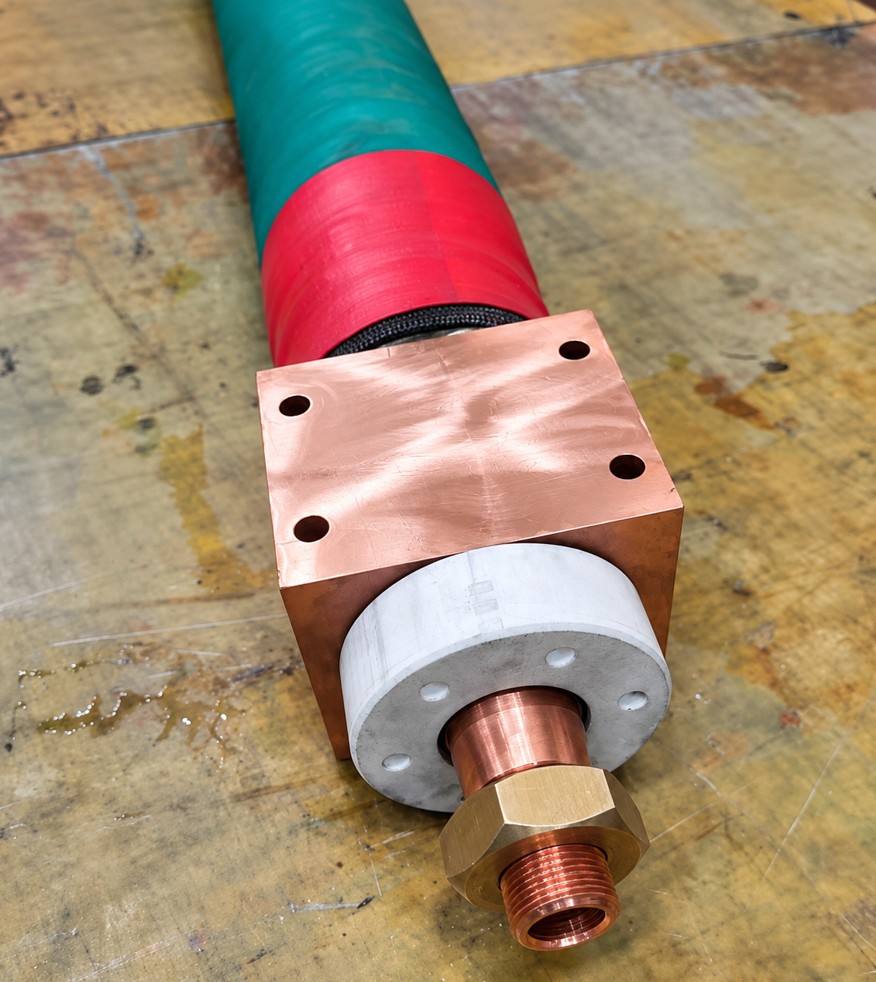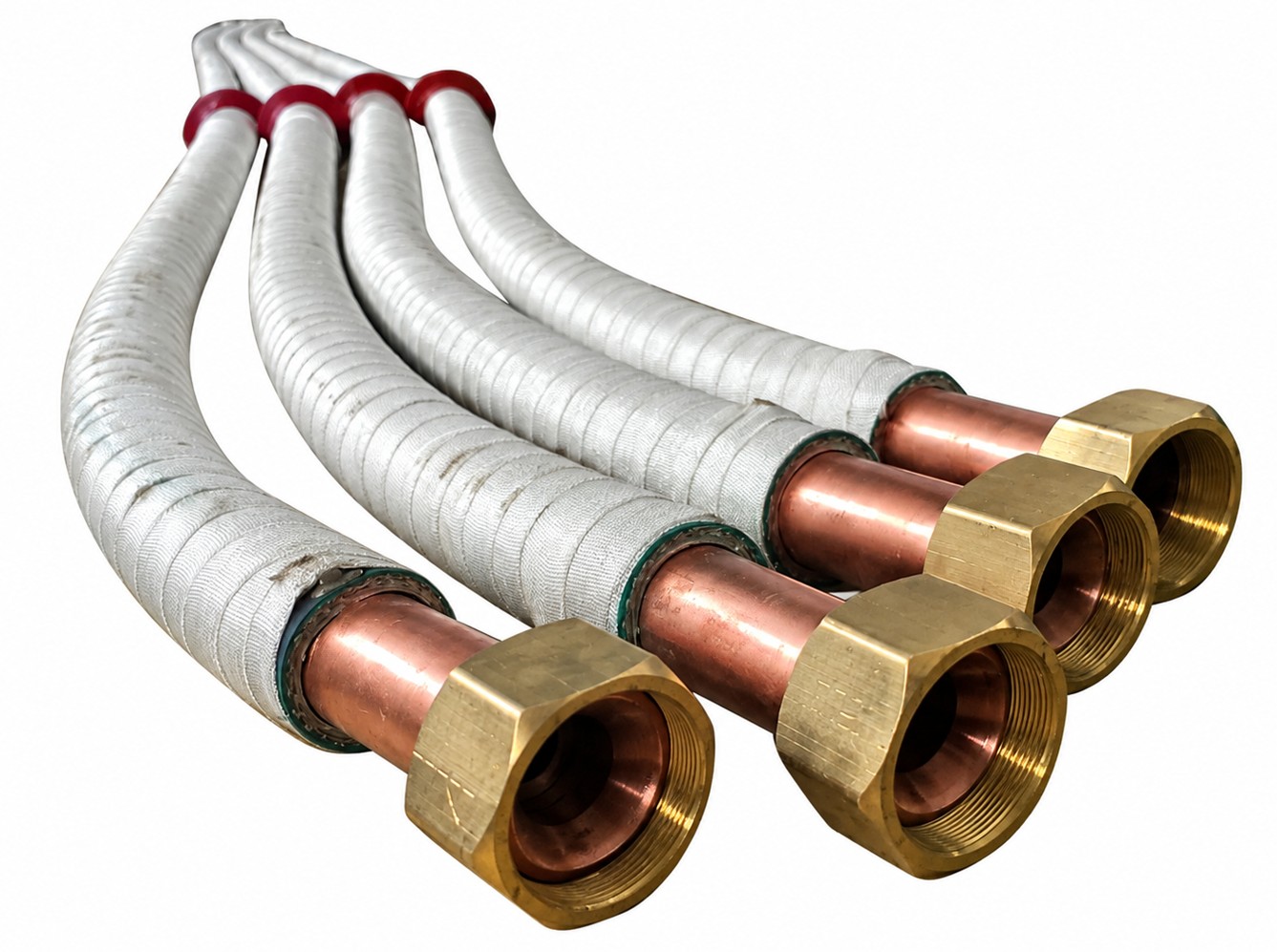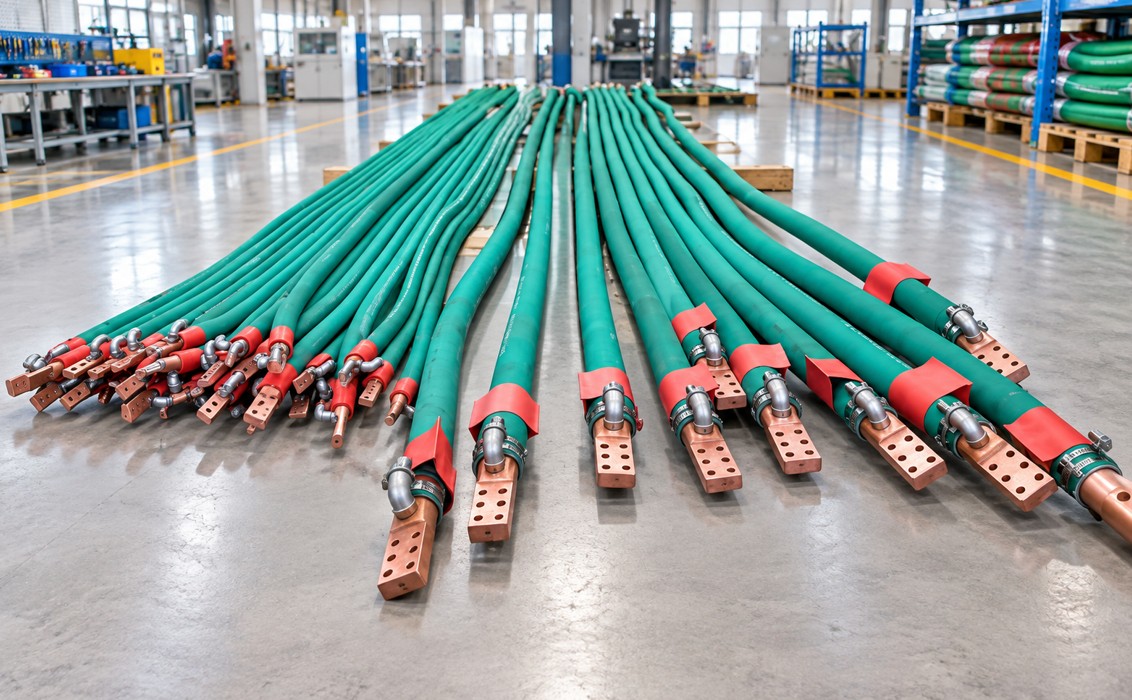
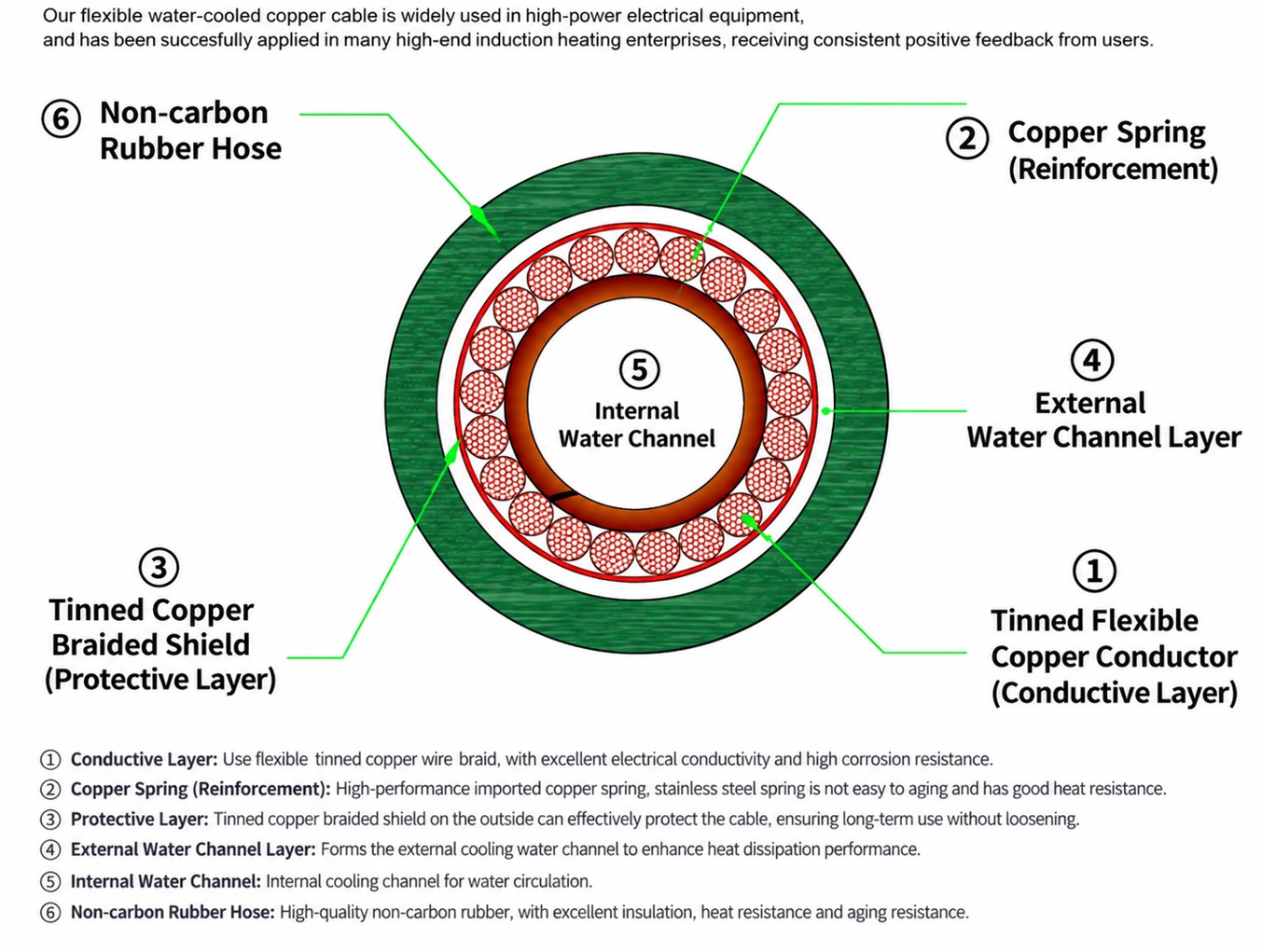
A furnace water-cooled cable has two jobs at the same time: transmit high electrical current and remove heat generated during operation. That is why its internal construction is more complex than an ordinary flexible power cable.
The conductive part is normally made from flexible copper strands. For furnace applications, flexibility is important because the cable may move with a tilting furnace, cross arm or other equipment. The cooling structure provides a controlled water path so heat can be removed during continuous operation.
The outer hose provides electrical insulation and mechanical protection. For demanding furnace environments, the hose selection should consider temperature, abrasion, bending and exposure to hot material.
In the technical construction used for our furnace cable range, the structure includes a tinned flexible copper stranded conductor, an internal water passage, an external water-cooling layer, a steel spring/frame and a non-carbon rubber tube. Tin plating is used as a protective layer on the copper conductor.
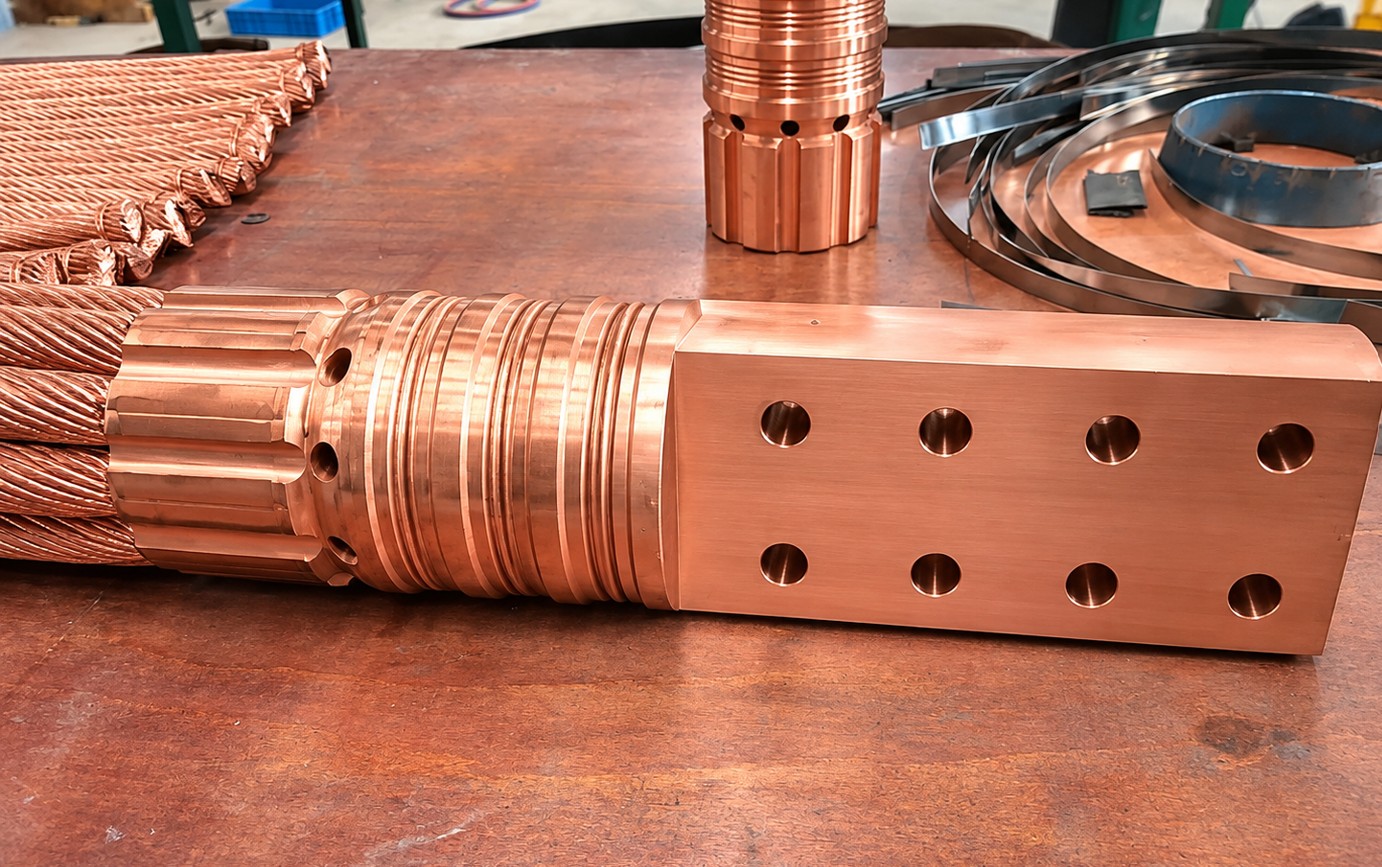
The terminal is another critical part of the assembly. A cable can have excellent copper conductors but still perform poorly if the terminal has unsuitable dimensions, inadequate sealing or poor contact with the furnace equipment.
For this reason, buyers should evaluate the cable as a complete assembly rather than comparing copper cross-section alone.
When requesting a quotation, provide photos of the complete cable and both terminals, overall length, conductor cross-section, water connections and furnace application. With this information, the manufacturer can determine the appropriate construction and terminal design.
A correctly engineered cable assembly helps the furnace operator maintain reliable power transmission while supporting the required mechanical movement and cooling system.
Related pages: Water-Cooled Cable · Cable Terminals · Induction Furnace Copper Coil · Technical Data · Contact / Get a Quote